EN
EN  ID
ID  AR
AR  ZH
ZH 
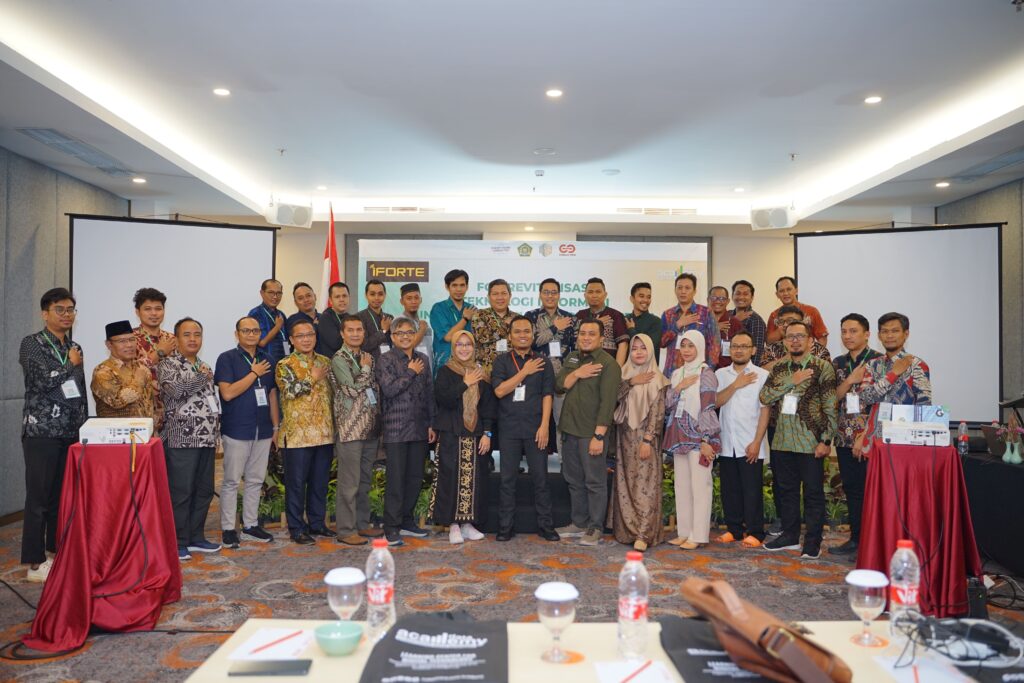
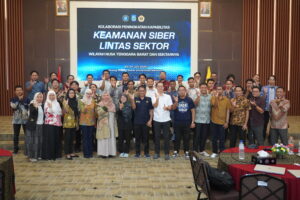
Malang – Digital transformation was the main focus of the Focus Group Discussion (FGD) held at the Ir. Soekarno Building (Rectorate) of UIN Maulana Malik Ibrahim Malang on April 26, 2024. The event, which featured the Heads of Information Technology and Database Centers (PTIPD) from State Islamic Religious Universities (PTKIN), served as an important space for exchanging ideas and formulating strategies for the digitalization of Islamic higher education.
In his remarks, the Vice Rector for General Administration, Planning, and Finance, Prof. Dr. Hj. Ilfi Nur Diana, M.Si., CAHRM, CRMP, emphasized the urgency of institutional transformation and digital services within PTKIN. He noted that PTKIN faces intense competition in new student admissions, particularly from the millennial generation, who are more responsive to fast and digital services.
“"If we don't immediately transform both our institutions and our digital services, PTKIN will lose out," Prof. Ilfi emphasized in his moving speech.
Prof. Ilfi highlighted the importance of improving the quality of digital services, not only in academic areas like student information systems, but also in non-academic areas like administration and public services. He assessed that PTIPD, as a driving force behind digital transformation, must be a pioneer in innovation—from smart campus concepts and smart classes to efficient and integrated big data management.
Another focus is the rebranding of the university's flagship programs, such as increasing its appeal to international students. Prof. Ilfi emphasized that adaptive and user-friendly digital services are key to reaching the global market for Islamic higher education.
The FGD also touched on the importance of integrating digital services between institutions, particularly with central government systems such as EMIS, PDDIKTI, BIOS, and data services under the Ministry of Religious Affairs. According to Prof. Ilfi, this integration challenge requires collaborative support between PTKIN (Private Universities) and close communication with the central government to ensure efficient and sustainable data sharing.
“"Maintain integrity and provide safe, convenient, and enjoyable digital services that meet the needs of society in this 4.0 era," concluded Prof. Ilfi.
This FGD not only served as a discussion forum, but also reinforced the shared commitment between PTKIN in addressing the challenges of digital transformation. The Head of PTIPD UIN Malang, Abid Yusron, S.Kom., CAHRM., MCE, who also serves as Deputy Chair of the PTIPD PTKIN Forum, expressed his hope that the results of this FGD could serve as a reference in designing a digitalization roadmap for each PTKIN. "Through this activity, we hope to unify our direction, strengthen a secure digital system, and improve the quality of Islamic higher education nationally," he said.
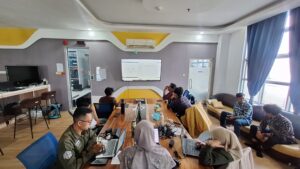
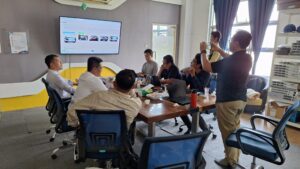
In the discussion sessions, FGD participants shared experiences related to the implementation of digital services, ranging from the development of integrated data dashboards and cybersecurity to the provision of web- and mobile-based self-service for students and lecturers. Digital transformation is not just about procuring devices and applications, but rather a shift in work and service culture that is oriented towards speed, transparency, and ease of access. Through this FGD, PTKIN is expected to not only be able to survive in the global competition of higher education but also emerge as a model for superior, modern, and highly competitive Islamic campus management.