EN
EN  ID
ID  AR
AR  ZH
ZH 
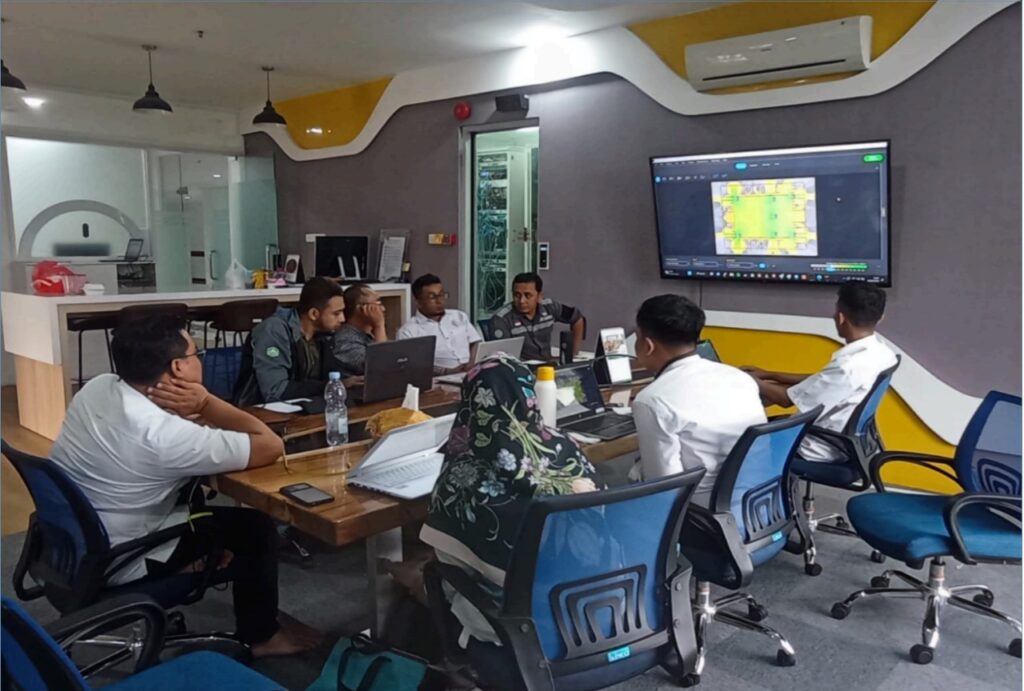
Malang – Students living in Mahad Campus 2 and 3 of UIN Maulana Malik Ibrahim Malang can now enjoy much more stable internet access. After a lengthy process lasting nearly two months, a technical team from the Center for Information Technology and Databases (PTIPD) has successfully completed a project to detect and repair the Wi-Fi network in the dormitory.
This project, which began on August 20 and will run until mid-October 2024, is a response to numerous complaints from dormitory residents about poor internet signal quality, particularly in their rooms. Students often experience difficulties accessing online course materials and daily communication due to weak, slow, or even no signal at all.
The main problem identified was that the WiFi signal was uneven and disrupted by the dormitory's design, which featured numerous partitions and voids between floors. Furthermore, the large number of users still using the 2.4GHz network caused high levels of interference. Placing Access Points (APs) in the hallways also presented a challenge, as the signal couldn't penetrate the walls of the rooms well.
In response, the PTIPD team implemented a series of corrective actions. One key step was relocating access points (APs) to rooms. This strategy allows one AP to serve two to three rooms directly. As a result, signal strength significantly increased and interference was reduced.
In addition to relocating existing equipment, the team also added new access points (APs) in several strategic areas not previously covered in the initial design, including new rooms and common areas such as the cafeteria and laundry room. A total of 22 additional access points were installed at Mahad Campus 3 and 55 APs at Mahad Campus 2.
After the relocation and addition processes were completed, connection tests demonstrated significant performance improvements. On August 29, 2024, more than 1,100 user devices were recorded as connected to the Mahad Campus 3 WiFi network, with traffic usage jumping from 80 Mbps to 250 Mbps. A similar trend occurred at Campus 2, where bandwidth consumption nearly doubled after the improvements.
This quality improvement was welcomed by residents. Not only did it speed up connections, but it also facilitated smoother learning and other online activities.
Through this project, PTIPD emphasizes the importance of network planning that takes into account the actual conditions of the building and user needs. Going forward, the team will continue to monitor and evaluate network performance to ensure it remains optimal and responsive to the dynamic needs of dormitory residents.